What my first lead-author paper’s rejection taught me about journal selection
Created: 2/13/2026, 6:43:57 AM · Updated: 2/13/2026, 7:06:39 AM
Choosing the right journal can significantly influence a manuscript’s trajectory. This reflective blog post explores the lessons learned from a first lead-author paper rejection, highlighting how journal fit, scope, and strategy often matter as much as scientific quality. It offers practical guidance to help researchers make informed, strategic decisions when selecting a target journal.
Submitting my first paper felt like a big achievement. Until it wasn’t.
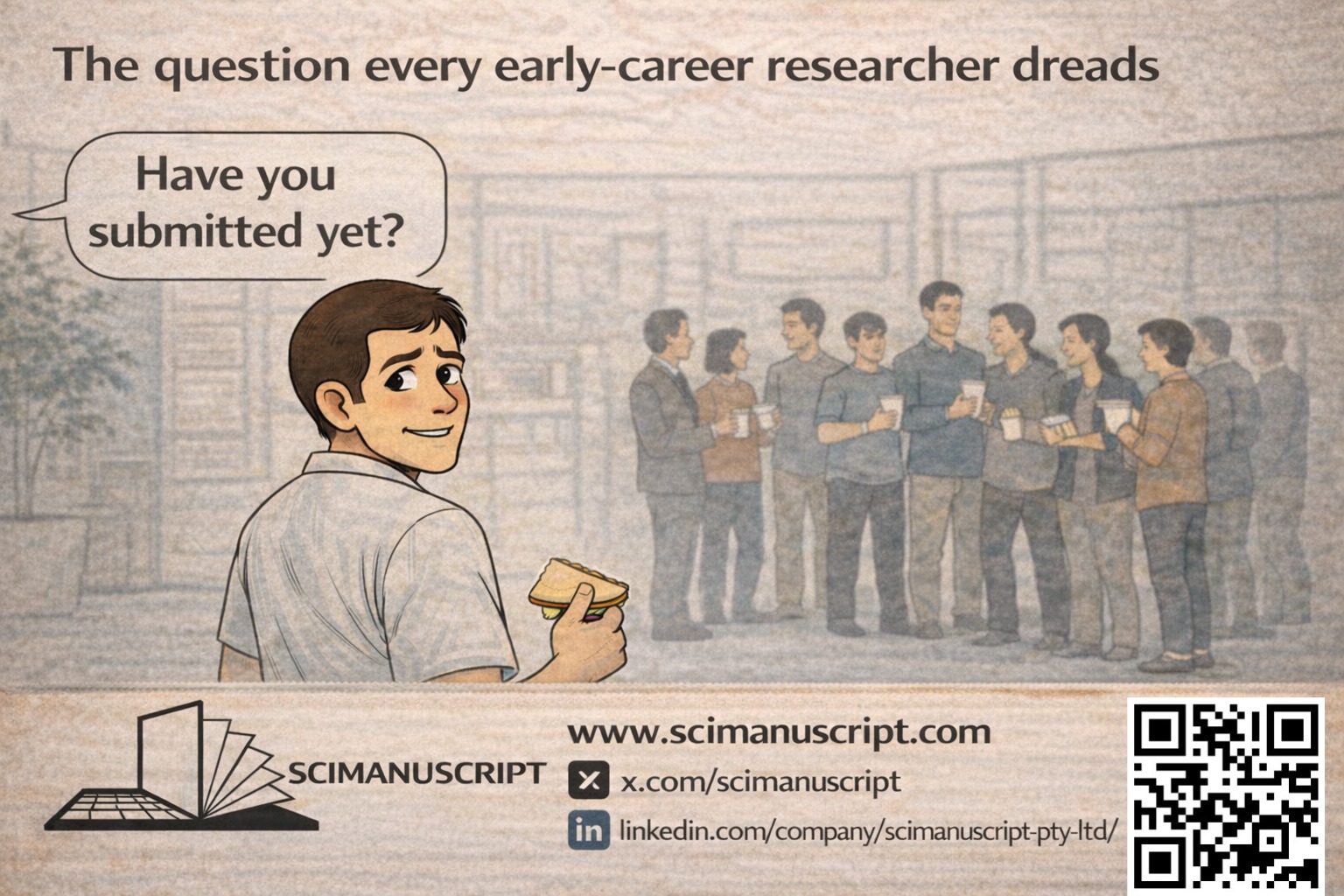
A few days later, a thesis committee member caught me during a post-seminar gathering and warned me, “Pratap, most papers eventually get published… but there are no guarantees about how soon or where.”
At that time, I took it lightly and assumed it didn’t apply to me. Only later did I realize she was warning me about time: months of waiting, the soul-crushing task of reformatting, and the emotional toll that hits early-career researchers hardest.
The reality of rejection
After two grueling rounds of review at our first-choice journal, the paper was rejected. It felt deeply personal. I spent weeks angry at “nameless” reviewers and was convinced that a direct competitor was intentionally stalling us. Unjustifiably, I was even upset with my PhD advisors. I reasoned, “How did my paper get rejected under their watch?”
Once I had cooled down, we pivoted to our second-choice journal, named after the specific brain region from which I was recording neuronal activity. It was a specialized, respected journal with a low impact factor (I know impact factor isn’t everything, but try telling that to a PhD student). The editor-in-chief had spent his career working on my exact neuronal circuit. This time, the paper was accepted with minor revisions in record time, because it was a better fit.
In hindsight, much of my frustration was misdirected. This is not to say that the process wasn’t draining; it certainly was, but I had misunderstood what the rejection actually meant. The main issue was journal fit, not necessarily science quality. While that first rejection was bruising, the manuscript had actually improved through the feedback. That lesson was expensive in terms of time and emotional energy, but it ultimately made me a more resilient researcher.
A few potentially useful tips for choosing a target journal
To save you from the emotional turmoil that I went through, here are some observations and potentially useful suggestions:
1. Aims and Scope matter (a lot)
Many journals report that over half (~55%) of submissions never reach peer review because they don’t fit the journal’s scope. This is a striking statistic, especially since most journals clearly state the type of work they accept.
Often, we misread the scope. It is not just about matching keywords but also includes the journal’s readership and level of analysis. A five-minute scan of a journal’s Aims and Scope can save you heartbreak, wasted time, and the pain of reformatting an entire 40-page document.
Remember: You can always email the editor-in-chief your abstract, titled “pre-submission enquiry,” to gauge their interest.
2. Make use of journal finding tools
If you are unsure where to submit, tools such as Elsevier’s Journal Finder, Wiley's Jornal Finder, and others can be helpful.
The Journal Author Name Estimator (JANE) is another useful tool for identifying suitable journals and potential reviewers. Based on your abstract, it suggests target journals and authors (potential reviewers) who have published on similar topics. It is worth exploring.
But remember: these tools optimize for similarity, not editorial priorities. Since they are not foolproof, always cross-check the journal’s scope manually.
3. Submission is not just about clicking “Upload”
Before you submit, carefully check the Instructions for authors to ensure:
- Word counts: Does the 5,000-word limit include references? Check now, not later.
- Supplementary data: Some journals (e.g., Science, Nature) require most methods to be moved to supplementary material.
- Highlights: Some journals mandate 3–5 highlights (85 characters each) at the time of submission.
- Graphical abstracts: These are becoming increasingly common, especially in life sciences journals.
- Reference formatting: Manual reformatting of references after desk rejection is particularly painful if you did not use a citation manager such as EndNote or Zotero (an unnecessary frustration).
- British vs American English: A minor but important issue is the type of English (US vs UK) preferred by journals. “Behaviour” and “aluminium” can be an irritant if US English is the preferred choice. If no preference is stated, choose one and be consistent.
4. Do not give reviewers an excuse about language quality
Strong science is the foundation, but language is the interface. For interdisciplinary or high-tier journals, the reviewers might not be experts in your niche. Poorly written manuscripts and heavy use of abbreviations (without definitions) create friction between your data and their tired brains.
Remember: You do not have to be an English scholar. Just remove as many obstacles as possible so that reviewers can focus on the science, not your language.
In hindsight: Be strategic about your journal choice
Choosing a journal is a high-stakes decision, especially in biomedical fields, where the timeline from submission to publication can range from three months to nearly two years. For early-career researchers, that is an eternity and can mean losing the chance to apply for a scholarship or even missing out on a postdoctoral opportunity. Therefore, be strategic in choosing your target journal (when you have the opportunity).
If I could go back, I’d tell myself: “Pratap, stop looking at the impact factor first. Find the three journals where researchers doing your kind of experiment publish most often. Read their last 12 issues. If your figures would look normal next to theirs, you’re in the right place. Everything else is secondary.”
About the author: Anupratap Tomar is the head of the Neuroscience Editing team at SciManuscript. This perspective comes from his experience as an author, reviewer, and professional manuscript editor—not from a journal editorial role.
Connect with SciManuscript: X: https://x.com/scimanuscript
LinkedIn: https://www.linkedin.com/company/scimanuscript-pty-ltd